You’re queued up for a ranked Rainbow Six Siege match, your team is picking operators, and someone types “entry?” in team chat. If you’ve stared at that message confused, you’re not alone. Many new players take months to wrap their heads around the game’s specialized team roles, and few are as widely misunderstood as the entry fragger. In this guide, we’ll break down exactly what is an entry fragger in Rainbow Six Siege, what they contribute to their team, how to play the role well, and what mistakes to avoid if you want to carry more matches and climb the ranked ladder faster.
Core Responsibilities of an Entry Fragger in Rainbow Six Siege
A lot of new players assume entry fraggers are just the team’s designated rusher, whose only job is to run in first and get as many kills as possible. That’s not even close to the full story. The entry fragger’s primary role is to be the first player to push a contested site, clear initial defender angles, gather critical intel, and create space for the rest of their team to move in. Kills are a nice bonus, but they’re not the main measure of success for this role.
Even if you die 10 seconds into the push, if you call out two defender positions, break a key soft wall, and trigger a Kapkan trap that would have taken out your entire team, you did your job perfectly. I’ve been playing Siege for 6 years, and I’ve won dozens of matches where our entry fragger had a 1/3 K/D but set up the entire team for a clean site take. That’s the kind of impact most casual players don’t notice until they start playing the role themselves.
You’re also responsible for setting the pace of the round. If you dally too long before pushing, defenders will have time to reposition and set up crossfires that make the site almost impossible to take. If you push too fast without letting your team catch up, you’ll be picked off alone and leave your team down a player before the round even really starts. Balancing that pace is one of the hardest, and most important, parts of the role.
Best Operators for Entry Fragger Play
There’s no one “right” operator for entry fragger play, but some are far better suited to the role than others thanks to their speed, utility, and kit. The most popular entry picks across all ranks are:
Ash is the most common entry pick for a reason. She’s a 3-speed, 1-armor operator with breaching rounds that can blow open soft walls and hatches from a distance, no need to get up close and risk being picked off. Her small hitbox makes her harder to hit when she’s peaking angles, and her R4-C assault rifle is one of the most stable and easy-to-control weapons in the game for new players.
Sledge is another top pick, especially for players who prefer a bit more survivability. He’s a 2-speed, 2-armor operator with a tactical hammer that can break any soft surface in one hit, letting him open lines of sight and new entry points faster than any other operator. His shotgun secondary is also perfect for clearing tight corners and room entries quickly.
Iana is a great pick for players who are still learning common defender angles. Her holographic clone lets her check rooms and angles without risking her own life, and she can trick defenders into wasting utility or giving away their position before she ever pushes. She’s also a 3-speed operator, so she can move quickly between entry points if the first push doesn’t work out.
You don’t have to stick to meta operators to be a successful entry fragger, either. If you’re more comfortable with a slower op like Thermite that can also open hard walls for your team, you can absolutely adapt the role to your playstyle. The only real requirement is that you’re comfortable being the first person into a contested space, and that you’re willing to communicate what you see as you push. When you’re not grinding ranked to practice your entry play, it’s a good idea to take short breaks every few matches to avoid burnout and keep your reaction times sharp. Many players use 5 to 10 minute breaks between queues to stretch, grab a snack, or play a low-stakes mobile game to reset their focus, and YonoAppStore has a great selection of short, casual games that fit perfectly into those small gaps without pulling you out of your competitive mindset.
Key Entry Fragger Strategies to Master Fast
You can pick the perfect operator and still be a bad entry fragger if you don’t follow basic strategy. These three simple tips will help you get 80% of the way to being a great entry player, even if you’re still new to the role:
- Clear common pre-fire angles first: Most defenders will hold common entry points like doorways, window sills, and top of stairs for the first 30 seconds of the round. Pre-fire these spots before you peak to catch them off guard, and you’ll pick up free kills before they even have time to react.
- Communicate every piece of intel immediately: If you spot a defender, a trap, a reinforced wall, or a roamer, call it out right away even if you know you’re about to get eliminated. Your team will use that info to adjust their push and take the site without walking into the same traps you did.
- Don’t overstay your welcome after the initial push: Once you’ve opened the site, cleared 1-2 defenders, and called out all the intel you have, fall back to let your support and hard breachers move in. You don’t need to wipe the whole site alone to do your job well, and pushing too deep will just waste the space you just created.
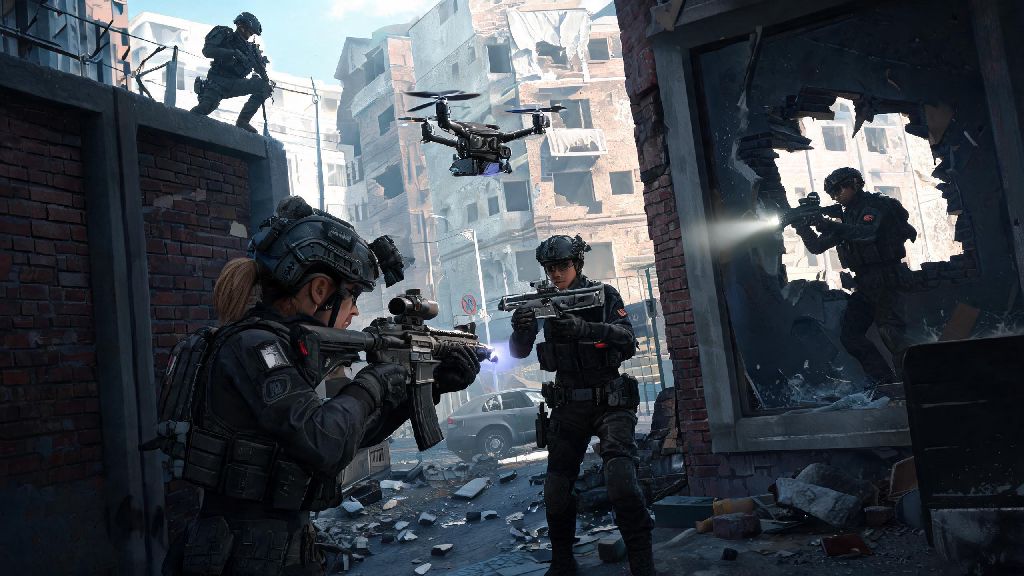
Another small tip that most players miss: Always save one drone for the push itself. A lot of new entry players use both their drones during the prep phase, and have no way to check for traps or hidden defenders right before they push the site. Even a 2-second drone check of the entryway can save you from a Frost mat or a hidden roamer that would have ended your push before it started.
You should also coordinate your push with your team’s utility. If your Twitch has a drone that can take out defender gadgets, wait for her to use it before you push. If your Thatcher has EMP grenades to disable Bandit batteries, wait for him to throw them before you run into the site. Coordinating with your team’s support players will make your job 10 times easier, and you’ll die far less often.
Common Entry Fragger Mistakes to Avoid
Even experienced players make these entry fragger mistakes all the time, and they cost teams dozens of rounds every match. The first and most common mistake is pushing without any team support. If you run into the site while your team is still 50 meters away spawning, you’re just feeding the defenders a free kill, and you leave your team down a player before the round even really starts. Always wait for your team to be in position before you push, and call out your push 2 seconds before you go in so they can follow you.
The second big mistake is prioritizing kills over intel and space. I see so many entry fraggers get one kill, then chase a roamer halfway across the map instead of staying near the site to help their team take it. Even if you get 3 kills in a round, if you’re not there to help your team take the site, you’re not doing your job. Remember: the goal of the round is to plant the defuser or clear all defenders, not to get the highest K/D on the team.
The third common mistake is ignoring drone usage. Drones are your most valuable tool as an entry fragger, and using them properly will cut your death rate in half. Don’t just rush into a room blind, even if you think you know where the defenders are. A quick drone check will tell you if there’s a Caveira hiding behind the door or a Kapkan trap on the frame, and save you from a frustrating, avoidable death.
Finally, don’t get discouraged if you die a lot when you first start playing entry. It’s the highest-risk role in the game, and even pro players die first in 40% of their rounds as entry. Your impact isn’t measured by your K/D, it’s measured by how much easier you make the round for the rest of your team.
Now you have a clear understanding of what is an entry fragger in Rainbow Six Siege, and you’re ready to take on the role in your next ranked queue. Start small by practicing in casual matches first, focus on communicating intel and creating space instead of getting kills, and you’ll be carrying your team to wins in no time. Next time someone types “entry?” in team chat, you can volunteer confidently.