If you’ve ever loaded into a Rainbow Six Siege match only to get eliminated 10 seconds in by a player you never even saw, you’re not alone. Unlike fast-paced, run-and-gun FPS games, Siege rewards patience, map knowledge, and team coordination far more than raw reaction speed. That’s why learning how to play online rainbow six siege the right way will cut weeks of frustrating losses out of your early grind, and help you start having fun with the game a whole lot faster. I’ve put over 1200 hours into Siege across casual, ranked, and even a few local amateur tournaments, so I’ve pulled all the most critical beginner tips into this guide to keep you from making the same mistakes I did when I started.
Pre-Game Prep: Optimize Your Settings and Queue Choices
Before you even jump into a match, small adjustments to your settings and queue picks will make your first few dozen matches way less overwhelming. A lot of new players skip this step and jump straight into quick match, which usually leads to getting paired with players who have hundreds of hours already, so don’t make that mistake. First, tweak your audio settings first, because Siege is a game where you hear enemies before you see them 90% of the time. Turn music volume all the way down, and boost your dialogue and effect volume by 10-15% above your default settings — this will let you hear footsteps, barricade breaks, and drone beeps from much farther away. That’s one of the most underrated first steps when you’re figuring out how to play online rainbow six siege, because so many new players write off audio as a secondary concern. You don’t need expensive surround sound headphones for this, even basic earbuds work if your levels are set right. Next, pick the right game mode to start. Don’t jump into ranked until you’ve got at least 50 casual matches under your belt, and skip the quick match “unranked” playlist entirely at first. Stick to the new player casual playlist for your first 20 matches, because it only pairs you with other players who have less than 10 hours of play time, so you won’t get matched against smurfs or veteran players picking on new folks. You can also spend 10 minutes in the practice range first to get a feel for recoil on the basic entry-level weapons, but don’t waste hours there — you’ll learn far more from real matches than you ever will from shooting stationary targets.
Core Basics to Master When You Learn How to Play Online Rainbow Six Siege
Once you’re in a match, there are 3 non-negotiable basics you need to focus on before you worry about getting kills or winning rounds. These are the same skills every pro player still uses every match, so mastering them early will give you a huge leg up over other new players. First, always use your drone before you enter a room. Too many new players run straight into a building without scouting, and get picked off by a defender hiding in a corner. Your two drones at the start of an attacking round are your most valuable tool — use them to find the objective, mark enemy positions, and note any traps like Kapkan mines or Frost mats before you push. Never waste both of your drones in the first 30 seconds of the round; keep one in reserve near the objective so you can check for enemy rotations later in the round if your team loses track of defenders. Next, learn how to hold angles properly. In most FPS games, you run around corners looking for enemies, but in Siege, the player holding a static angle almost always wins the fight if both players have equal reaction speed. If you’re defending, pick a spot that covers an entry point to the objective, and keep your crosshair placed exactly where an enemy’s head will be when they walk through the door. You don’t need to move around constantly to find fights; let the enemies come to you. Third, communicate with your team even if you don’t have a mic. The in-game ping system is one of the best parts of Siege, and you can use it to mark enemy positions, trap locations, and where you plan to push without saying a word. Even if you just ping a defender hiding on the second floor, you’re saving your entire team from getting eliminated by that player.
You don’t need to remember every operator gadget or every nook of every map when you’re just starting out. If you stick to these four priorities every round, you’ll already be a more valuable team member than 70% of other new players. I still follow these exact rules every match I play, even when I’m queuing ranked with my regular squad, because they work no matter what your skill level is.
Operator Pick Rules for New Casual and Ranked Players
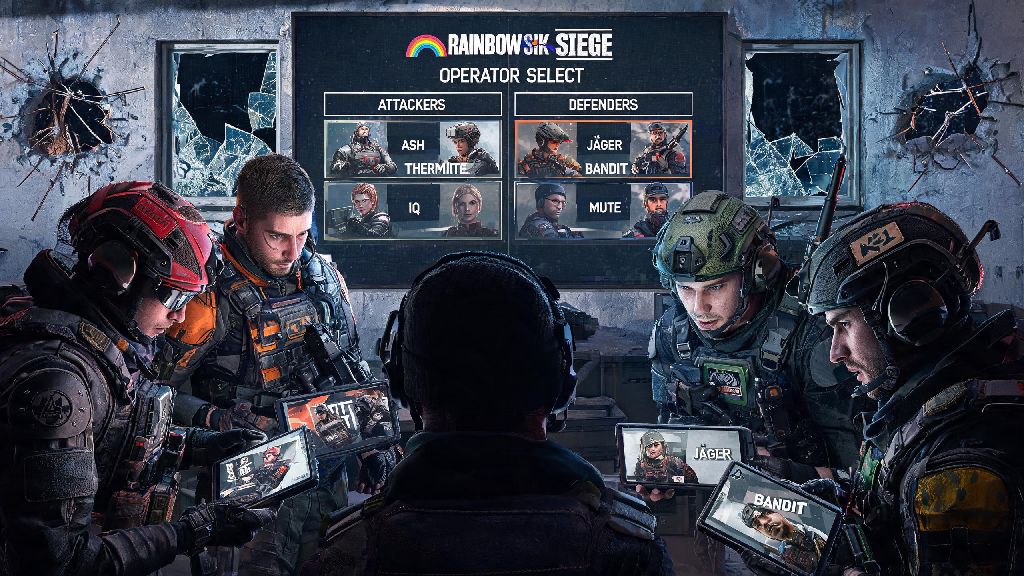
With 70+ operators available in Siege, picking the right one for your first few matches can feel completely overwhelming. A lot of new players pick the flashiest operators with the most complex gadgets, and that’s almost always a mistake. Stick to simple, low-skill floor operators for your first 50 matches so you can focus on learning map knowledge and core mechanics instead of mastering a complicated gadget. For attackers, start with Sledge, Thatcher, or Ash. Sledge’s sledgehammer lets you break through soft walls and floors without needing to use explosives, and he has a very low-recoil primary weapon that’s perfect for new players. Thatcher’s EMP grenades disable all defender gadgets in a small radius, so you just need to throw them at reinforced walls before your team pushes, no complex strategy required. For defenders, start with Rook, Doc, or Mute. Rook’s armor pack is the easiest gadget in the game to use: you just place it on the floor near the objective at the start of the round, and it gives every teammate extra damage resistance. Rook is the single best operator for brand new defenders, because even if you get eliminated in the first 30 seconds of the round, you still contributed to your team’s success by placing that armor pack. Once you’ve got 30 or 40 matches under your belt, you can start experimenting with more complex operators, but don’t rush it. I see new players try to pick operators like Ace or Oryx within their first 10 matches all the time, and they almost always end up wasting their gadgets and letting their team down. It’s far better to master 2 or 3 simple operators first than to be mediocre at 10 complex ones. If you’re not sure what to pick, ask your team at the start of the round — most players are happy to suggest an operator that fits the team comp, especially if you mention you’re new to the game.
Common Mistakes to Avoid in Your First 100 Matches
I made every single one of these mistakes in my first few months of playing Siege, and almost every new player I’ve coached has made them too. Avoiding these will cut your learning curve in half, and help you win way more rounds early on. First, don’t destroy every wall and barricade you see. A lot of new attackers will break every barricade they walk past, which just tells defenders exactly where you are and gives them free angles to shoot you from. Only break barricades that are blocking your path to the objective, and leave the rest intact so defenders can’t easily rotate behind you. For defenders, don’t reinforce every wall in the objective site. Some walls are meant to be left soft so you can rotate between rooms or create new angles to shoot attackers from; reinforcing the wrong walls can trap your own team in the objective with no way out. Next, don’t waste your utility early in the round. Grenades, breach charges, and defender gadgets are far more valuable later in the round when you know where all the enemies are, than they are in the first 30 seconds when you’re just guessing. Save at least one piece of utility for the final 30 seconds of the round when you’re pushing the objective or defending the plant, that’s when it will have the biggest impact. Third, don’t get tilted over losses. Siege has a steep learning curve, and you’re going to lose a lot of rounds when you first start, even if you play perfectly. If you lose three rounds in a row, take a 10 minute break, walk around, get a drink, and come back fresh. Tilted players make stupid mistakes, and you’ll learn far less if you’re angry while you’re playing. The last big mistake is ignoring the objective to chase kills. Siege is an objective-based game first, and kills are just a tool to help you capture or defend the objective. You can get 10 kills in a round, but if you let the enemy plant the defuser and win the round, those kills don’t matter at all. Always prioritize the objective over getting an extra kill, no matter how easy the kill looks.
At the end of the day, Siege is meant to be fun, and you don’t need to be a pro player to have a good time with your friends in casual matches. If you stick to the basics we’ve covered here, you’ll be surprised how fast you improve, and how much less frustrating your early matches feel. Learning how to play online rainbow six siege doesn’t have to be a months-long grind, and even small improvements to your play will make a huge difference in how many rounds you win. Take it one match at a time, focus on learning one new thing every round, and you’ll be holding your own against veteran players before you know it.