If you’re a new player thinking of picking up Rainbow Six Siege, or a parent researching before letting your kid download the tactical shooter, you’ve probably wondered why is Rainbow Six Siege rated M. The ESRB’s Mature 17+ rating isn’t arbitrary, and it’s tied to specific design choices Ubisoft made to keep the game’s gritty, realistic tactical feel intact. A lot of new players assume the rating is only for generic shooter violence, but there are far more specific details that factor into the official classification. We’re breaking down every core reason behind the rating, plus tips for navigating content settings if you want to adjust what you see while playing.
Core reasons why is Rainbow Six Siege rated M for realistic violence
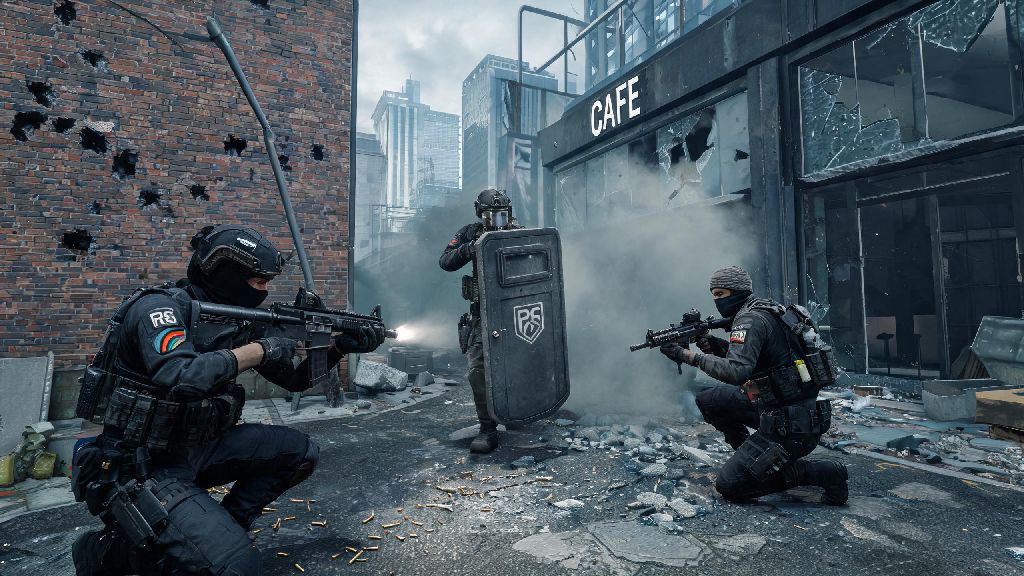
Unlike cartoonish competitive shooters like Fortnite or Overwatch, Rainbow Six Siege leans fully into grounded, realistic combat that doesn’t soften the impact of weapons or melee attacks. Operators use real-world firearms, tactical gear, and explosive tools that behave almost exactly like their real-life counterparts, and damage effects are designed to feel authentic rather than stylized. Bullet impacts on unarmored opponents leave visible blood splatters that stay on maps for the full round, and downed players show visible injuries as they crawl to safety or wait for a revive.
For example, if you hit an enemy operator in the leg with a shotgun, you’ll see a realistic blood trail that follows them as they retreat to cover. You can use that trail to track their position, which is a core tactical mechanic that high-rank players rely on to win rounds. Ubisoft has stated multiple times that they won’t remove blood effects by default because it would break this core part of the gameplay loop, which is a big part of why the rating stays at M instead of being lowered to T. Executions of downed opponents, which are a common tactical choice to prevent revives, are also shown without censorship, adding to the mature tone.
There’s no over-the-top gore or dismemberment in the base game, but the level of realistic violence is far higher than what’s allowed in a T-rated shooter. The ESRB specifically cites this realistic depictions of violence as one of the top drivers of the M rating, as it’s not appropriate for younger players who may not be able to distinguish between game violence and real-world consequences.
Frequent strong language from in-game dialogue and voice chat
Another key factor in the M rating is the frequent use of strong language both in pre-written in-game content and unmoderated player communication. Operator dialogue, story cutscenes, and even in-match callouts regularly feature explicit language that isn’t censored by default. Swear words including f-bombs, harsh insults, and crude references show up regularly in both casual and ranked match dialogue, even if you turn off all player-to-player communication.
I’ve played Siege on and off for six years, and I can confirm that unmoderated voice chat is often full of explicit language, especially in higher-rank competitive lobbies where players get frustrated easily. The ESRB’s rating accounts for this unmoderated player content, as there’s no default filter for voice chat that blocks explicit or harassing language. Even text chat has frequent explicit messages from other players, though you can enable a profanity filter for text if you want to block that content.
Ubisoft does have moderation tools in place for reported toxic behavior, but the moderation isn’t real-time, so you will still encounter explicit language if you leave chat features enabled by default. This unmoderated communication, combined with explicit pre-written dialogue, is another core reason for the M rating that many new players overlook when they first look at the game.
Mature thematic content tied to in-game story and events
Rainbow Six Siege’s lore and limited-time events regularly cover heavy, mature themes that are not appropriate for younger audiences, even if you turn off violence and language filters. The game’s core storyline revolves around an international counter-terrorism unit responding to real-world-style threats, and many events reference real crises that are too heavy for teen or pre-teen players. Many limited-time events reference real-world crises including human trafficking, bioterrorism, and organized crime that are presented with a gritty, realistic tone rather than a stylized, family-friendly approach.
These themes aren’t just throwaway references either. The 2023 Nighthaven event, for example, focused on a private military corporation committing war crimes to seize control of bioweapon research facilities, with cutscenes showing civilian casualties and graphic depictions of explosive attacks. That level of thematic depth is great for adult players who care about the game’s lore, but it’s far too heavy for pre-teen or young teen players.
Some of the most common mature themes that show up in official Rainbow Six Siege content include:
There is no sexual content in the base game or official events, which is a common misconception many new players have about the M rating. But the heavy thematic content alone is enough to push the rating into mature territory, even without the violence and language factors.
Content adjustment options for players who want to tone down explicit material
Even though the official rating is set at M for players 17 and older, Ubisoft has added a wide range of accessibility and content settings that let you tone down explicit material if you want a more comfortable play experience, or if you’re a parent letting an older teen play with supervision. You can turn off all blood and gore effects in the accessibility settings menu, which replaces blood splatters with neutral impact effects that don't affect gameplay. You’ll still be able to see where you hit an enemy, so you won’t lose any tactical advantage from turning off blood effects.
You can also disable all explicit language from in-game dialogue, which replaces swear words with milder alternatives or cuts the explicit lines entirely. You can also set up a profanity filter for text chat that blocks all explicit player messages automatically, and you can turn off voice chat entirely if you don’t want to hear unmoderated player communication. You can even disable cinematic cutscenes from playing automatically, so you won’t accidentally stumble on mature thematic content from event storylines.
It’s important to note that even with all these filters enabled, the game still has a core tactical loop that’s focused on lethal combat, so it’s still not appropriate for players under 13 even with adjusted settings. Many parents I’ve spoken to let their older teens play with filters enabled, but they supervise their play sessions to make sure they’re not exposed to toxic player communication. That’s a solid middle ground if you’re comfortable with your teen playing a mature shooter, but it doesn’t change the official ESRB rating that’s based on the default unfiltered experience.
None of these settings will get you banned from ranked or casual play, so you can adjust them to fit your comfort level without worrying about losing access to any game features. Just remember that the M rating is there for a reason, and even with filters, the game is designed for an adult audience first and foremost.
At the end of the day, understanding why is Rainbow Six Siege rated M helps you make an informed decision about whether the game is right for you or your family. The rating is based on intentional design choices that keep the game’s tactical, realistic tone intact, and there's no way to change the official classification even with adjusted content settings. If you're a younger player interested in tactical shooters, you might want to try lower-rated alternatives until you're old enough to play R6 responsibly. For players who are old enough, adjusting content settings can help you tailor the experience to your comfort level without missing out on any of the competitive fun that makes Siege such a popular game for long-term players.