There’s nothing more frustrating than grabbing your favorite operator, loading up your ranked queue, and getting hit with a connection error right as you’re about to start a match. If you’ve found yourself refreshing the home screen over and over wondering why are Rainbow Six Siege servers down, you’re definitely not alone. As someone who’s put over 1,200 hours into Siege across console and PC, I’ve run into this issue enough times to know exactly what’s usually going on behind the scenes, and how to tell if the problem is on Ubisoft’s end or yours. This guide breaks down every common cause, plus easy steps to get you back into matches as fast as possible.
Top Reasons Why Are Rainbow Six Siege Servers Down
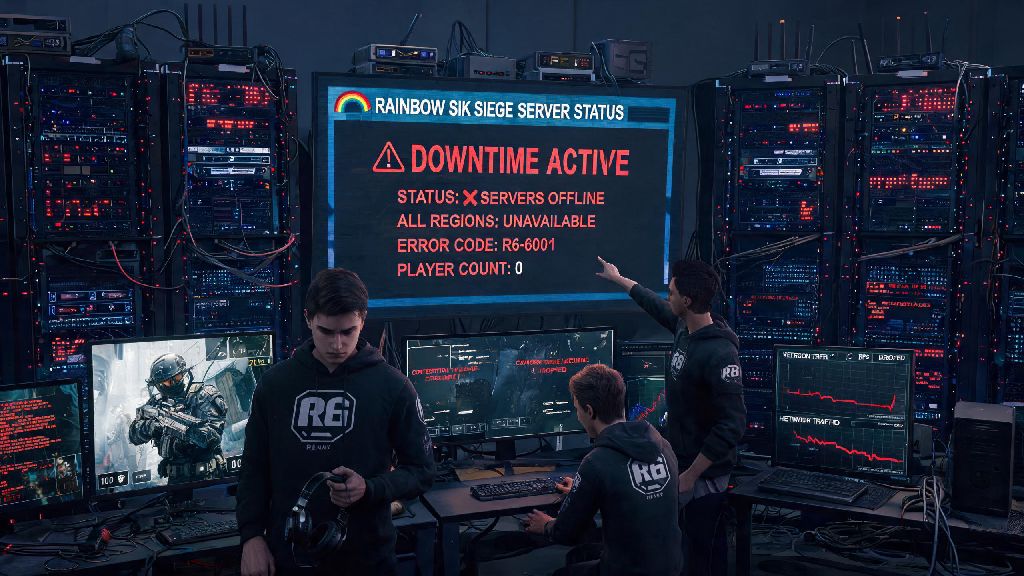
Most server outages don’t happen out of nowhere, and there are a handful of causes that account for 99% of connection issues players face. The first and most common is scheduled maintenance for patches or content drops. Ubisoft runs regular maintenance windows every 2-4 weeks to push balance changes, fix critical bugs, or roll out new operation content. These windows are usually scheduled for low-traffic hours, but they can run over if the team runs into unexpected issues during deployment. You’ll almost always get a heads up about scheduled maintenance 24-48 hours in advance via official channels.
Another common cause is unscheduled outages from unexpected server errors. Even the most well-maintained infrastructure can run into glitches, especially after a big patch drops. A single broken line of code can cause entire regional servers to crash, and it can take the engineering team anywhere from 15 minutes to a few hours to identify and fix the issue. These outages are usually unannounced, so you won’t get a warning before they happen.
While less frequent, DDoS attacks targeting Siege server infrastructure do happen from time to time. Bad actors will flood Ubisoft’s servers with fake traffic to overwhelm the system, making it impossible for legitimate players to connect. Ubisoft has strong anti-DDoS protections in place, but large, targeted attacks can still slip through occasionally, especially around big tournament or new operation launch dates.
The last common cause is regional server overload during peak play hours. If you’re trying to log on between 7PM and 11PM local time on a weekend, you might run into partial outages just because too many players are trying to connect at once. These usually only last 20-30 minutes as the server auto-scales to handle the extra load, and you’ll usually be able to get in after a few retries.
How to Confirm If Server Issues Are Widespread or Local
Before you assume the problem is on Ubisoft’s end, it’s worth taking 2 minutes to rule out issues with your own connection or device. I can’t tell you how many times I’ve complained about servers being down only to realize my router had crashed mid-update. Follow these simple steps to figure out where the problem is coming from:
So, if the status page says servers are online and no one else is posting about outages, the issue is almost certainly on your end. Don’t worry, most local connection issues are super easy to fix with a few simple steps.
Quick Fixes If The Connection Problem Is On Your End
There are a handful of easy fixes that resolve 90% of local connection issues for Siege players. The first thing you should try is restart your router and gaming device. Most connection errors come from cached IP conflicts or minor software glitches that a simple restart will clear out. I usually restart my router first, wait 2 minutes for it to boot back up, then restart my PC or console. That alone fixes the issue 7 out of 10 times for me.
If that doesn’t work, check for pending game or system updates. Ubisoft blocks older versions of Siege from connecting to official servers to prevent cheaters from exploiting outdated bugs, and to make sure all players are on the same balance patch. If you have auto-updates turned off, you might be running an old version without realizing it. Just install any available updates, restart your game, and you should be able to connect.
Another common culprit is VPN or proxy services. If you’re running a VPN to access region-locked content, disable any VPN or proxy services you’re running before you launch Siege. Ubisoft’s anti-cheat system often flags VPN connections as suspicious, and free VPNs are almost always blocked entirely because they’re frequently used by cheaters to evade bans. I learned this the hard way last month when I left my VPN on after watching a foreign streaming service, and spent 20 minutes trying to figure out why I couldn’t connect.
If none of those fixes work, try resetting your in-game network settings. Go to the settings menu, find the network tab, and switch your match region from automatic to your actual local region. Sometimes the automatic region picker will try to connect you to a faraway server that’s overloaded or blocked by your ISP, and manually selecting your region will fix that immediately. You can also try toggling cross-play off and back on, which resets your connection to the matchmaking servers.
What To Do While Siege Servers Are Actually Down
If you’ve confirmed the servers are offline for everyone, there’s no use spamming the connect button over and over. Instead, use the downtime to improve your game so you’re ready to climb the ranks as soon as servers come back up. One of the best ways to spend this time is to review your recent match replays to spot mistakes. Most players save their last 10 ranked matches, but almost no one actually watches them back. You’ll be shocked how many small mistakes you notice that you missed in the heat of the moment, like bad positioning or missed audio cues that cost you the round.
You can also practice your aim in offline training modes. Terrorist Hunt and the in-game aim training range don’t require an internet connection, so you can work on your headshot line, reaction time, and recoil control while you wait. I like to spend 15-20 minutes in the range every time servers go down, and I’ve noticed a noticeable improvement in my aim since I started doing that. You can also use offline aim training software that’s customized for Siege if you want more structured practice.
If you’re not in the mood to practice, plan your loadouts and strategies for the next operation. If a new operation is coming soon, you can read up on the new operator’s abilities, test out new loadout combinations in the offline range, or come up with new site takes for the reworked map. I once spent a 3-hour server outage rearranging all my operator loadouts and coming up with a new Smoke setup for Consulate, and my KD went up 0.2 over the next week of ranked play just from that small change.
Next time you log on and find yourself asking why are Rainbow Six Siege servers down, you don’t have to waste time scrolling through random forums for answers. Start with the quick checks we covered to rule out issues on your end, and keep an eye on official channels for updates if the problem is widespread. Even if you have to wait a little while for servers to come back up, you can use that time to sharpen your skills so you’re ready to climb the ranks as soon as queues are live again. Happy fragging once you’re back in the match.