If you’ve logged off Rainbow Six Siege for a year or two and come back to menus you barely recognize, you’re not alone. Many lapsed players have asked what happened to Rainbow Six Siege, wondering if the tactical shooter they fell in love with is still the same game it was at launch. I’ve been playing Siege consistently since its 2015 release, grinding ranked matches, covering community drama, and testing every major update as it drops, so I’ve got a front-row seat to all the shifts that have shaped the game over the years. This guide breaks down the biggest changes, why they happened, and what you can expect if you decide to jump back in today.
The Core Gameplay Overhauls That Rewrote Siege’s Meta
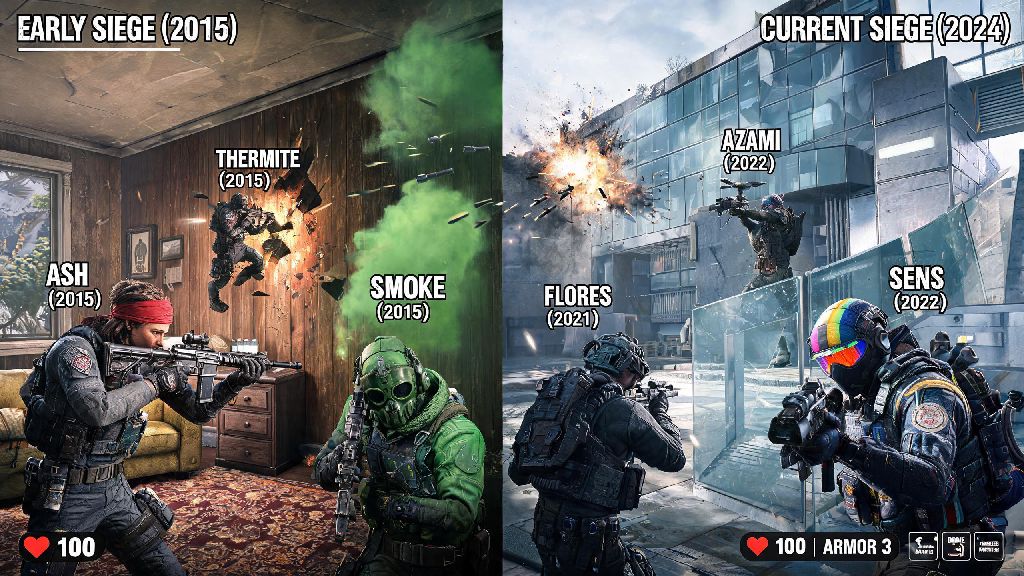
If you’re wondering what happened to Rainbow Six Siege’s chaotic early meta, these overhauls are the main reason. The early years of the game were defined by uncounterable operator combos, inconsistent map design, and mechanics that heavily favored players who had been around since launch. Ubisoft has spent the last five years refining those systems to make the game more accessible for new players without taking away the tactical depth that long-time fans love. Operator reworks have been the biggest driver of meta shifts, with underused characters getting full ability overhauls and overpowered picks getting nerfed to make them more balanced. The introduction of cross-play and cross-progression in 2022 was another game-changing update, uniting player pools across PC, console, and cloud platforms for the first time.
Some of the most impactful gameplay changes from the last three years include:
Many of these changes were met with backlash when they first launched, especially the damage falloff adjustment, but most long-time players agree they’ve made the game feel far more balanced for casual and competitive players alike. You won’t run into the same uncounterable operator combos that made 2018-2019 ranked play feel like a chore, and new players have far more tools to learn the game without getting steamrolled by veteran smurfs.
What Happened to Rainbow Six Siege’s Original Casual & Ranked Playlists?
If you haven’t played since before 2020, you probably remember casual play as a chaotic, no-stakes mode where you could mess around with off-meta operators and not worry about your rank. That’s mostly still true, but the playlist structure has changed dramatically to reduce queue times and make matches more fair. The original casual mode was replaced with Quick Match in 2023, which removes the pick/ban phase, shortens round times, and gives players pre-selected operator loadouts to speed up match start times. For players who want the full pick/ban experience without the stress of ranked, there’s also the Unranked playlist, which uses the same rules as competitive play but doesn’t affect your MMR.
Ranked play has also seen major overhauls, with the addition of five new ranks between Copper and Diamond to reduce skill gaps in each tier. You won’t see a Bronze player matched against a Platinum player anymore, which was a common complaint just a few years ago. Even the ranked reward system has been updated, with exclusive skins, charms, and weapon skins available for players who hit certain ranks each season, instead of just a single charm for finishing the season. The only original playlist that’s still mostly unchanged is the Terrorist Hunt PvE mode, which is still a great way to practice aim and operator abilities before jumping into PvP matches.
The Shifting Community Landscape & Esports Evolution
Siege’s community has changed a lot over the years, too. The early days were filled with meme content, casual streamers, and a small but dedicated competitive scene, but today the game has a far more diverse player base. The Rainbow Six Siege Invitational, the game’s biggest annual esports tournament, now draws over 2 million concurrent viewers at its peak, making it one of the most-watched tactical shooter esports events in the world. That growth has brought in a lot of new players, but it’s also led to some shifts in the community’s overall vibe.
Many long-time fans who ask what happened to Rainbow Six Siege’s laid-back community are referring to this pre-2020 era. You’ll still find plenty of casual lobbies where players mess around and joke over voice chat, but ranked lobbies are far more focused on winning than they used to be. If you’re playing for fun, sticking to Quick Match is your best bet to avoid overly competitive teammates who get mad over small mistakes. There’s also been a huge rise in custom game modes, from hide-and-seek to prop hunt, that keep casual players engaged even when they don’t feel like grinding ranked matches. Ubisoft has supported these community creations by adding custom game settings and rotating limited-time modes that borrow from the most popular fan-made ideas.
Common Complaints Lapsed Players Have (And Whether They’re Still Valid)
A lot of lapsed players I talk to say they stopped playing because of toxic teammates, broken operators, and long queue times, so I wanted to break down which of these issues are still a problem today. First, toxicity is still present, as it is in every online competitive game, but the reputation system has made it far less common. You can also mute or report players in two clicks, and repeat offenders get banned quickly, so you won’t have to deal with the same toxic player multiple times. Queue times are another common complaint, but cross-play has cut average queue times for all modes by over 60% in most regions, so you won’t wait 10 minutes for a casual match anymore. The only exception is extremely low-pop regions, where you might have to wait a few extra minutes for a ranked match.
Another frequent complaint is that Ubisoft adds too many new operators too fast, making it hard to keep up with all their abilities. That’s a fair point, as the game now has over 70 playable operators, but Ubisoft has added a new player onboarding system that teaches you the most important operators first, and you can unlock operators in any order you want now, instead of being locked to a specific release order. The only issue that’s still a major pain point for many players is the occasional bug or glitch, especially after new season launches. Ubisoft usually patches critical bugs within a week of release, but minor glitches like clipping issues or ability malfunctions do still pop up from time to time.
At the end of the day, what happened to Rainbow Six Siege is that it grew up. The janky, unbalanced tactical shooter that launched in 2015 has evolved into a polished, accessible game that caters to both casual players who want to mess around with friends and competitive players who want to grind for the top ranks. It’s not perfect, and some long-time fans do miss the chaotic vibe of the early years, but there’s never been a better time to jump in, whether you’re a brand new player or a lapsed veteran looking to get back into the action. If you decide to give it a try, start with Quick Match to get used to the new operators and maps before you jump into ranked, and don’t be afraid to mess around with off-meta picks to find what works for you.