If you’ve ever spawn peeked and immediately got taken out by a player hiding in a spot you didn’t even know existed, you know how brutal Rainbow Six Siege can be for new players. Most new users spend their first 20 hours dying to traps, misusing operator abilities, and getting flamed by teammates for missing obvious calls. I’ve been there too, and I’m here to break down exactly how to get good at Rainbow Six Siege without wasting dozens of hours guessing what works. These tips come from 4 years of playing ranked, hitting Platinum 3 three separate seasons, and coaching 12 new players to hit Gold in their first 100 hours of play.
How to Get Good at Rainbow Six Siege: Master Map Knowledge First Before Anything Else
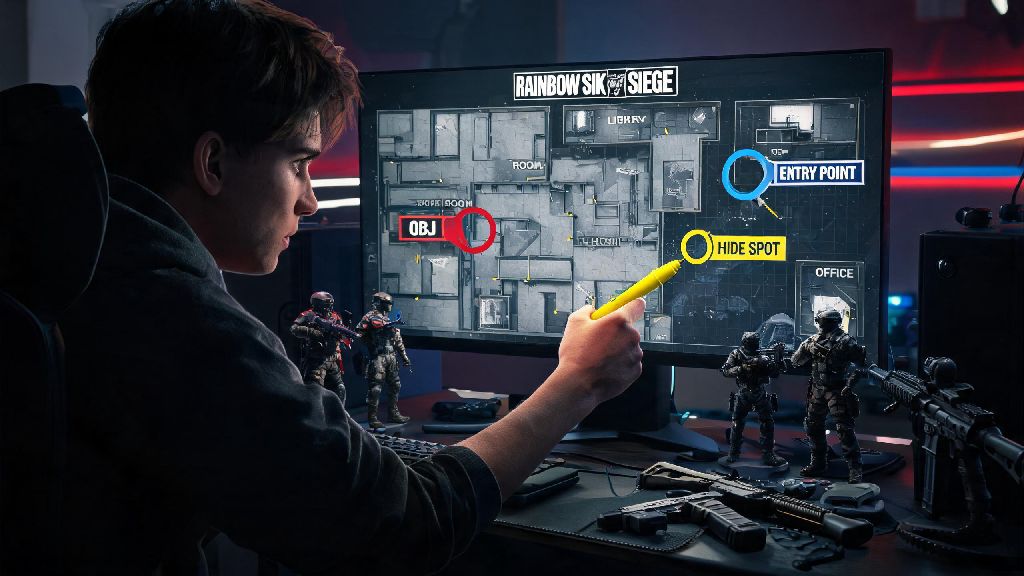
Map knowledge is the single most important skill in Siege, even more important than aim or operator choice. I made the mistake of trying to learn all 15+ maps at once when I first started, and I spent 3 months stuck in Bronze because I never knew where enemies could come from. Once I narrowed my focus to only Bank and Clubhouse for 2 weeks, I jumped two ranks immediately, because I could predict where roams would hide and which angles I needed to hold.
You don’t need to memorize every inch of every map at once. Pick 2-3 maps that show up most often in low-rank play (Bank, Clubhouse, and Oregon are great starting points) and only play those in casual until you know their layouts like the back of your hand. Pay extra attention to soft wall locations, hatch placements, and common roam spots that players use to catch attackers off guard.
Always check common hiding spots first when entering a room – under desks, behind couches, in bathroom stalls, and behind half walls are where 70% of low-rank roams hide. You can also spend 10 minutes a day watching short map guide clips to learn off-meta angles that most players won’t expect you to know. That small time investment will pay off in way more won fights and fewer surprise deaths.
Pick 2-3 Attack and 2-3 Defense Operators to Master First
A lot of new players rush to unlock every operator as fast as possible, but that’s one of the biggest mistakes you can make when you’re first starting out. Each operator has unique abilities, loadouts, and use cases, and spreading your time across too many of them means you won’t get comfortable with any single playstyle. Even pro players stick to a small pool of 5-7 operators for ranked play, so you don’t need to be a jack of all trades to climb ranks.
Stick to these beginner-friendly operators first, as they have simple abilities that work in almost every team comp:
When you only play 2-3 operators per side, you’ll learn their recoil patterns, optimal positions, and ability use cases much faster. I still play Sledge and Jäger 80% of the time when I’m playing ranked, because I know exactly what I can do with them and I don’t have to waste time thinking about how to use my ability mid-fight.
Prioritize Positioning and Game Sense Over Raw Aim
So many new players spend hours in aim trainers thinking that’s the only way to get better at Siege, but that’s a waste of time for most players below Platinum rank. Siege is a tactical shooter, not a fast-paced FPS like Call of Duty, and fights are almost always won by the player who gets the first look, not the player with the best flick aim.
90% of fights in lower ranks are won by the player who sees the other person first. That means you should always focus on holding angles where enemies are likely to appear, instead of running around the map looking for fights. Use shoulder peeks to check for enemies before exposing your whole body, and pre-fire common angles when you hear footsteps approaching. I once took out three attackers in a single round as Jäger on Clubhouse without even moving, just because I knew they would push garage first and I held the angle with a pre-fire. That fight had nothing to do with aim, it was all about knowing the common push route and being in the right spot.
You should also make a habit of saving your drones on attack instead of wasting them in the first 10 seconds of the round. Use your drone to scan rooms before you enter, especially if you’re the first person pushing an objective. On defense, use your prep phase time to drone common entry routes so you know where attackers are coming from before they even get close to the objective. That small bit of intel will help you position yourself perfectly to take them out before they see you.
Learn How to Communicate Effectively With Your Team
Siege is a team game, and you can’t carry every match alone even if you’re the best player in the lobby. You don’t need to be super chatty or have a high-end mic to communicate well, but calling out key information goes a long way toward winning more matches. I’ve won so many matches where our team had lower average skill than the other team, but we communicated well and coordinated our pushes.
Only call out relevant information – no need to yell about missing a shot or complain about your team’s mistakes. Just say where the enemy is, how many there are, and what operator they’re playing if you know. For example, instead of yelling “he’s over there!” say “one Ash in Bank main lobby, pushing server room”. That’s way more useful for your team, and it takes less than 2 seconds to say. If you don’t want to talk, the in-game ping system works great too, but voice comms are always better for ranked play.
Also, make sure you listen to your teammates’ calls. If someone says there’s an enemy behind you, don’t ignore it even if you don’t see them. I can’t tell you how many times I’ve seen players ignore calls and get picked off because they thought they knew better. Don’t flame your teammates for mistakes either, everyone is learning, and toxicity just makes everyone play worse. Even a quick “nice try” after a teammate misses a shot will make them play better for the rest of the match.
Getting better at Siege takes time, but you don’t need to grind 40 hours a week to see real progress. Stick to the tips we covered here, be patient with yourself, and you’ll start winning more matches and climbing ranks faster than you think. The most important thing to remember when learning how to get good at Rainbow Six Siege is that every death is a learning opportunity – take a second to think about what you did wrong, adjust, and try again next round. Before you know it, you’ll be the one taking out new players who don’t know your favorite hiding spot.