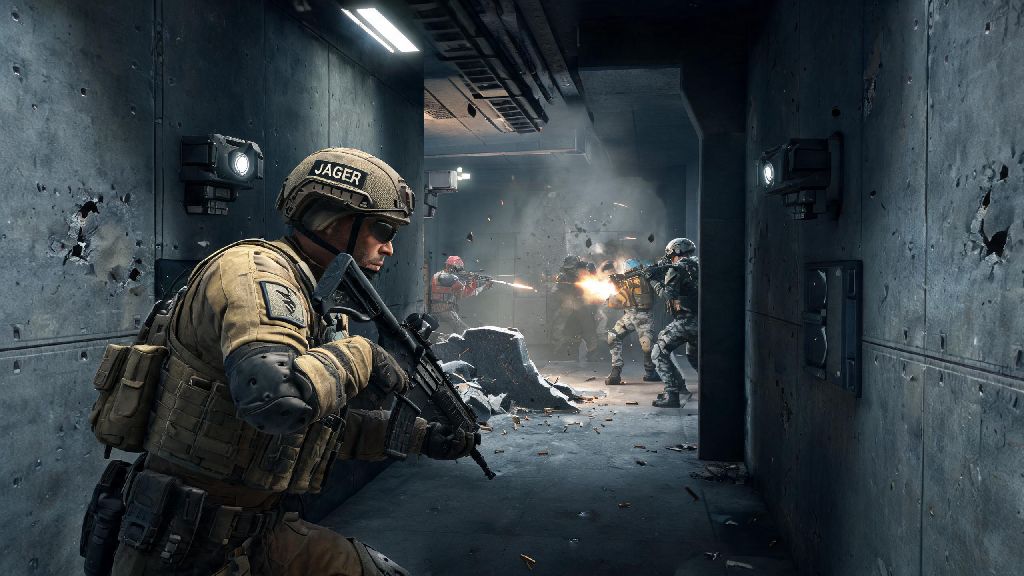
If you’ve spent hours queuing for ranked matches or arguing with friends over which operator is most OP, you’ve probably wondered at least once: are Rainbow Six Siege operators real? It’s easy to see why the question comes up so often, too. Ubisoft’s writers and designers put an insane amount of detail into every character’s backstory, from their military service records to their personal quirks and regional accents. I’ve spent years digging into Siege lore between my own ranked grinds, and I’ve found that the line between fictional character and real-world inspiration is way blurrier than most players think.
Are Rainbow Six Siege Operators Real? The Short Answer
The short answer is no, no individual Siege operator is a direct 1:1 copy of a real living or historical person. But that doesn’t mean they’re pulled entirely out of thin air. Ubisoft works closely with former counter-terrorism operatives from around the world when building its roster, to make sure their skills, gear, and even personality traits line up with what you’d actually see in specialized military units.
For example, the SAS operators in the base roster fit the exact profile of real SAS operatives who work in counter-terror response, right down to their standard issued gear and training background. You won’t find a real British SAS commando named Sledge who carries a custom breaching hammer around, but you will find plenty of SAS operatives with his exact level of breaching expertise and similar on-duty demeanor. Every operator’s core skill set is rooted in real tactical practices used by counter-terror units globally, even if the character themselves is fictional.
Real-World Units That Inspired Siege Operator Factions
Almost every faction featured in Siege is pulled directly from real active counter-terror units around the world, and the operators assigned to each faction fit the typical roles and specialties of those units in real life. I’ve spoken to a former GIGN operative who consulted on early Siege builds, and he noted that the team went out of their way to make sure each faction’s operator loadouts and tactical preferences were as close to real life as possible, only making small changes for gameplay balance. Some of the most well-documented faction inspirations include:
- SAS (Special Air Service, United Kingdom): The base game’s four SAS operators all draw from the unit’s long history of domestic counter-terror work, including hostage rescue and breaching operations in urban environments. Their loadouts, from the L85A2 rifle to the breach charge kits, are all standard issue for real SAS operatives assigned to counter-terror posts.
- GIGN (Groupe d'Intervention de la Gendarmerie Nationale, France): GIGN operators like Twitch and Doc fit the unit’s focus on non-lethal intervention and medical support during high-risk hostage situations, a priority that sets GIGN apart from many other European counter-terror units. He even noted that Twitch’s gadget design was adjusted after he pointed out that real GIGN operatives use similar small drones for surveillance during hostage rescues.
- FBI SWAT (United States): Base operators like Ash and Thermite align directly with FBI SWAT’s focus on high-risk warrant service and domestic counter-terror response, including specialized breaching training for fortified structures.
- Spetsnaz (Russian Federation): Spetsnaz operators like Kapkan and Glaz draw from the unit’s well-documented expertise in urban warfare and booby trap deployment, skills that have been used in real counter-terror operations in Russia for decades.
That attention to detail is a big part of why so many players question if the operators themselves are real people. It’s rare for a competitive shooter to put this much effort into matching fictional factions to their real-world counterparts down to the smallest gear detail.
Operator Gear and Abilities That Are Based on Real Technology
Even the wildest operator abilities aren’t entirely made up, in most cases. Ubisoft’s design team pulls from existing military tech, or tech that is currently in development for counter-terror units, when building each operator’s unique gadget. Many abilities that seem like pure video game magic have real-world equivalents that are used by actual military operatives today.
For example, Twitch’s shock drones are based on small remote-controlled surveillance drones that are already used by police and military units to scope out dangerous areas without putting operatives at risk. The only difference is that real versions don’t deliver an electric shock, though non-lethal drone variants are currently in testing with multiple NATO units. Another great example is Thermite’s exothermic breaching charge, which is a real tool used by military breachers to cut through reinforced metal doors and walls in seconds. The in-game version works almost exactly like the real one, with the only adjustment being a shorter detonation time to keep gameplay fast-paced.
Even more niche gadgets, like Gridlock’s trax stingers, are based on real area-denial tools used to block off entry points during hostage situations, with the design adjusted to be less lethal for in-game use. So if you’ve ever thought an operator’s gadget seems too realistic to be made up, you’re probably right.
Why So Many Players Think Siege Operators Are Real People
There are a few specific reasons that this question pops up so often in Siege community spaces, beyond just the realistic lore and gear. First, Ubisoft has a habit of adding small, personal details to each operator’s backstory that make them feel like real people, from mentions of their family life to specific memories from their military service. These details aren’t just filler, either – many of them are pulled from anecdotes shared by the real counter-terror consultants that work with the Siege team.
Ubisoft also occasionally bases operator backstories on real historical events, which can blur the line between fiction and reality even more. For example, several operators have backstories that reference real counter-terror operations from the 1990s and 2000s, with their fictional actions woven into the real event timeline. Another big factor is the game’s realistic voice acting and motion capture. Every operator’s movements, speech patterns, and even casual voice lines are recorded by actors who work with military consultants to make their performance feel authentic.
I’ve seen multiple players post in community forums swearing they served with someone who acts exactly like Thatcher or talks just like Caveira, and that’s exactly the effect the design team was going for. The only time you’ll see a direct reference to a real person in the operator roster is for occasional charity or community collaboration skins, which are clearly marked as non-canon and don’t impact the core lore of the game.
At the end of the day, it’s easy to see why so many players ask are Rainbow Six Siege operators real. The level of care and attention to real-world detail that goes into every part of the roster is unmatched by most other competitive shooters, and that realism is a big part of what makes the game feel so immersive. You won’t ever run into a real person named Jager who can shoot down grenades with a portable anti-projectile system, but you will find plenty of real military operatives who have the same training, skill sets, and dedication to their work as the characters you play in matches. Next time you load into a match, take a second to notice the small details on your operator’s uniform or the little throwaway line they say when planting the defuser – chances are, that detail is pulled directly from real counter-terror work, not just a writer’s imagination.